Archive for the ‘Music’ Category

1384036_10151756249723845_800283056_n

Images from Facebook

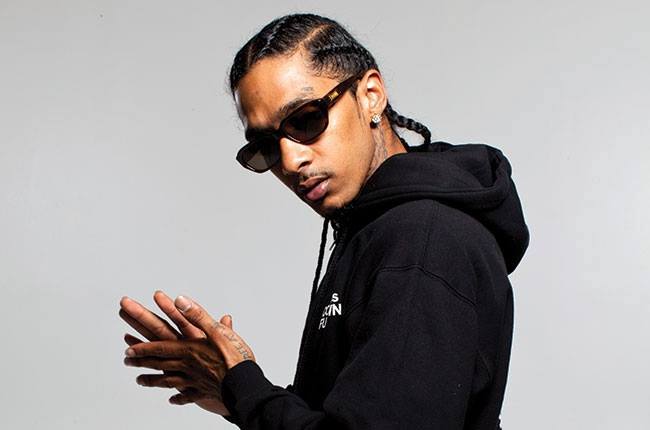
Nipsey_Hussle_Crenshaw-front-large

MAS – Your Proud2Pay program, and Crenshaw, have generated a ton of recognition for you as a business mind. I see interviews with you all over talking about your marketing strategies and business acumen. I’m not seeing a lot of people talking about your lyrical style or your album content. I know the old saying is “there is no such things as bad press”, but what do you think about all the attention being paid to your marketing strategy instead of your album content?

Nipsey Hussle – I think that people have already accepted that fact about Nipsey Hussle; that Nipsey is a great lyricist, that Nipsey is a true artist, and that he represents a real condition. You know what I’m saying? The condition of South-Central Los Angeles and the West Coast in general. I think that is a known fact. I think for them to see me take a stand as a businessman and innovate in the category of marketing and release strategy that was new information about Nipsey Hussle. I think that was something that was a new discovery. I think that is why you saw a lot of attention being paid to the campaign Proud2Pay, Fuck the Middle Man, $100 Mix Tape. The direction we chose to go in with our stance in the game as an owner, I think that was all new information. I think artists, like myself, who have been around 3, 4 or 5 years, that’s what people look for in your conversations. When they get a new convo from you, they look for the new information; they look for the new discovery. I think that was what was new about Crenshaw and just that moment in time. You  know?

But I felt that also, I told my team, the marketing plan was the single for this album. The tape’s strategy was the single because that was what was the most important to us. At my show, that’s where I get the feedback for my lyrics, my energy and my message; my concerts, that’s where I really check and see. The people can say whatever they want in the magazines and in the interviews. When people come out, pay money, stand in line, scream your lyrics at the top of their breath, sweat, you know what I’m saying, and get hysterical. To me, that’s the most honest form of feedback.

MAS – Right now you are still working as an independent; I know the typical path to success is to get hooked up with a major label or group like Shady, Cash Money or something like them. Are there any specific groups out there that you think you would be a good fit? I know that you tried to get something going with Rick Ross and MMG that go derailed, but are there any others that get you thinking?

Nipsey Hussle – The Rick Ross and MMG thing didn’t get derailed; it was just conversations, getting to know each other. Respecting what we are doing and seeing if there was a situation that makes sense businesswise. That is still an ally of mine and a friend and a homeboy I look to for life and advice.  Just a real individual outside of music, you know the capacity of what he can do within music. As far as just focused, passionate talented dudes, I draw them type of people.

To answer the question, you know, I think that my goal is to exist in the game the way that the people that we grew up looking up to existed in the game. Master P exists as an owner. Brian Williams and Slim Williams, you know the Williams Brothers, they exist as owners. You know what I’m saying? Jay-Z, Puffy, they all exist as owners. You know, their careers had ups and downs but I think the thing that really distinguished them from the rest of the pack is that they fought for ownership and they fought for excellence. And so, I am just doing what I was raised looking up to. I always looked up to those individuals because they fought for that and they were different than the way the industry owned artists and creators. They exceeded that, and they also were successful as artists but they reaped the benefits as owners. I’m just trying to take my craft to the next level, be as big as I can be but remain in control of the ownership and the equity, to some degree.

MAS – You got a good role model in Bryan Williams, The Birdman. If you can live up to that role-model…

Nipsey Hussle – Yeah, it’s not just Bird though; he’s one of the dudes I respect. I respect TIP. I respect and even Ludacris. They came in and got a joint venture for DTP. I’m looking at it from the perspective of a shrewd businessman. This is a billion-dollar industry you know? I don’t think we just walk through it as just happy-go-lucky artists. I think we should be concerned about where income is generated and what our true assets are.

MAS – You said it yourself, you have been in the game for some time now. You have seen some good things and some bad things. I know you’ve had your troubles with labels, just like everybody else has. With your overall, different level of business acumen, what do you think is the number 1 problem facing artists, like yourself, from being able to take that next step? If you could change something in the game, what would it be?

Nipsey Hussle – I think that I would try to integrate the systems a little bit more. I think that is one of the main things that plague major labels and big operations. Systems become separated; marketing doesn’t speak to A&R, A&R doesn’t speak to executives, executives don’t speak to business affairs, business affairs don’t speak to radio. And not necessarily only speak, but work hand in hand and mobilize everybody under the same philosophy.

That’s the advantage that small companies have; the photographer, the designer, the head of design, the brand manager, the videographer, the tour manager, the engineer, the executive branch down to the legal, everybody is 100% on the same philosophy and business understanding. This is the goal, this is what we are doing, and it’s more focused and singular. It helps everybody, artists, and the actual companies. It takes the actual process to the next level. We go off of processes of creating albums on a mainstream level. You know just evolve that process a little bit.

MAS – On the east coast, North Carolina specifically, people know Nipsey Hussle. They know you based off of some of the work you’ve done. I want to give them a little background about you. I want them to learn who you are.

The name you have chosen to perform under, Nipsey Hussle, is obviously a play on the name of the late comedian, poet and entertainer Nipsey Russell. A lot of guys in Hip Hop draw from elements of society that have a lot of negativity. We mentioned Rick Ross earlier, his namesake Ricky Ross is not known as the best guy in society. What made you decide to link yourself to someone like Nipsey Russell?

Nipsey Hussle – Originally, I just liked how it sounded. I wasn’t even educated on Nipsey Russell. It was something that one of my homeboys threw at me being playful and I liked how it sounded. I invited the Hussle part naturally, with how I grew up. The Nipsey part, come to find out, it was just a play-off of Nipsey Russell. I did do my research on him and see that he is just a lovable person; a comedian, a poet, an actor, someone that was respected. People loved to hear him; he was a fun person, somebody that did stand-up and TV shows and was just a character of love.

Originally what drew me to the name was; it rang, it sounded good. I’m a person that, I trust my instincts. When I hear something or see something I like, I don’t question it I just roll with it a lot of times. That was one of the instances of me expressing that part of my personality. I just liked how it sounded and I stuck with it.

MAS – To talk about your style and upcoming album, when you were just getting into the game, who did you look to as a guide for how you wanted to perform? Who did you draw from stylistically to help create your personal lyrical style?

Nipsey Hussle – I grew up in the 90s, I was born in 85, so I grew up in the 90s. So, you know, a cumulative collection of hip hop is where I derive my style from, everything dope. Up until 2006-07, when I ended up coming into the game. Once I got in the game, I stopped drawing and I stopped letting other artists influence me. I was at a level where I had to influence and I had to lead.

Just a collective of hip hop; everything from Snoop, Slick Rick, Jay, and even the new stuff. The dudes that came out with me I was influenced by their style. It was dope to see their take on what we grew up on. I’m sure I influenced a lot of them myself, you know. It’s just the collective of hip hop.

Urban creativity is what I was inspired by. People that came from places similar to where I came from that were also creative and successful at being creative. I looked at their story; I looked at the type of music perspective that they offered. I decided I want to evolve that, you know. I wanted to add to the conversation of urban creativity.

MAS – Of your mixtapes/albums, I have listened to Crenshaw and I am working on The Marathon and The Marathon Continues. From what I have heard so far, your lyrics carry a tone positivity and being lifted out of struggles or problems. Normally when we think of artists that have, or claim, any affiliations their lyrics are attached to drugs and violence exclusively. What has led you to go a different way with your lyrics while still being devoted to, and repping, the 60’s?

Nipsey Hussle – I think it is just refreshing to me bro.  I think that one thing I learned about music; “the closer to an artist you are, the better the music comes off.” Recognizing that makes artists probe themselves and really focus on who they are, try to get to the core of what makes them who they are. Once I went down that path I started to see that I’m a believer, I have faith, I believe. I’m a motivator. I’m a person that, I don’t accept, “you can’t”. I don’t believe that. I think that there is a difference between everything; the people that believe they can and people that believe they can’t. I think, if I can offer anything to the world, it would be that understanding. There is nothing that you can’t do; it is all about what you can convince yourself to believe in.

As humans we have a lot of power that we don’t necessarily tap into or that we are not necessarily conscious of or aware of. Or, that we sometimes use our power in a negative direction, in a negative way we create unflattering circumstances in our life. But, it’s just easier to expend energy to create positive circumstances. I believe that in my core and I live by that. So, through my music, if you were to go into the core of what my message is, it would be a law of attraction or mind over matter. Faith in your thoughts, that’s what I am really trying to get across.

I came from Crenshaw and Slauson, I came from 60th street. I grew up in the environment and in the culture of gangbanging. So, naturally, my conversation is going to start there. When it came time to really present myself, and present the person and the spirit that’s at the core of this person in this flesh. That’s what it is and that’s what I would like my message to represent; positivity, evolution, and forward progress.

MAS – I know calling out people by name can be more trouble than it is worth, so I’m not going to do it and I’m not asking you to do any of that either. But when you are described, you are often portrayed as a return to the glory days of rap. Back to when lyrics had edge and meant something. What do you think has happened to Hip-Hop and Rap? How did we get to this point where the guys getting air play are so slack and not really putting in the effort they should. They don’t have the talent or skill? How did we get to this point?

Nipsey Hussle – If you look at the history of Hip Hop, it goes in cycles just like everything else. We just came out of a real serious era before our generation came of age and became physical, before the Nipsey Hussles started popping up and the other artists from our generation that came around when I came in. You had seriousness; it was 50 Cent, it was G-Unit, it was Game, there was Street, everything, it was Young Buck. I think that, out of that, the people kind of got that story. They were like, “alright, we get that.”

Not to say that, if somebody from these environments or that lifestyle contributes something true to Hip Hop that it’s not going to connect. I still believe that’s not. I just think overall, collectively, the cultural message is about love, there are messages about free-spirited carelessness, and there are messages about partying. These are all things that happened in real-life.

For someone that is in lover lyrics or serious content, that might not be your cup of tea. But at the same time there is a level of, it’s necessary, to a degree. And also, it’s a form of evolution. It takes us out of the era that we were just in the thick of and brings us somewhere else.

I always think that being a street artist, and an artist that comes from the streets, the condition that we speak to never changes bro. It’s our place, it’s always a struggle, and it’s always the ambition to do better in the streets.  Street artists are going to be good at all times, but I think that the production might have changed a little bit. The angles artists take change a little but because of the wave of new age “emo rappers” or pop style stuff that’s working. It just changed the way street artists do what they are doing a little bit. It may influence the street artist to get with a different producer or be a little more melodic or come with a different cadence with their flow. As long as people are telling their truth and being honest about their experience, there is no one type of rap that is better than the other. It’s just cups of tea.

Me personally, I’m going to listen to the motivation music. I’m going to listen to the Jada, Jeezy. I’m going to listen to the… When you hop in your Benz and your leather smelling brand new, the song you want to hear when you do that. I want to listen to the songs that motivate you to reach for more and do better, that is “my cup of tea.” I can’t knock the party rappers; I can’t knock people that’s putting records in the club every week and talking about doing drugs and partying. As long as that is what their lifestyle is, and they are true to that, it’s all taste, it is all “eye of the beholder” type stuff.

MAS – In the coming weeks and months you are going to be releasing your next album Victory Lap, who all can we expect to hear featured on the album, producers and such?

Nipsey Hussle – As of now, we are so much in a record mode I don’t want to start leaking too much info yet. I want the story to be hot when the album date gets set. This is my full focus, is Victory Lap. It’s a lot of people that I have been working with; it’s a couple of people that I haven’t worked with before that came in on the project, producer wise.

Paramore and Lily Allen Visit FUSE's "The Sauce" - June 13, 2007 

Photo_FromUnde_305RGB_original

Walnut Creek Amphitheatre

Raleigh, NC

July 22, 2014

Paramore and Fall Out Boy
w/ Special Guests

new-politics-pic

New Politics

Tickets: HERE


artist_28_photo_4EB2AB3


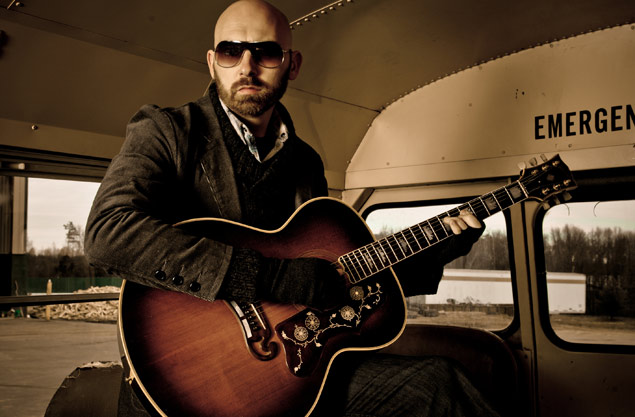
Corey Smith Cover

In doing what I do for this website, I get to talk to people from all types of backgrounds. I have talked to drug dealers, gang bangers, self-proclaimed company men and a good number of people that should probably be checked by a doctor. When I get to talk to someone that is honest, genuine and truly authentic I really take notice of how lucky I am.

In my recent conversation with Corey Smith, I got reminded of that luck/blessing in a large way. The time I spent talking with him felt like I was having a conversation with an old friend from back home that I hadn’t seen in a while . He is an example of what a true southern man should sound like.

Corey is about to start a tour with Darius Rucker and the Eli Young Band. That tour is going to be stopping for a show at the Crown Center in Fayetteville on April 18th.


TICKETS


MAS – In reading your bio, you have an interesting backstory. You decided to “go pro” with music a little later in life. Before deciding to make your way through music, on a full time basis, you were a high school Social Studies teacher right? Tell me about the decision to leave a “sure thing” job and paycheck to take on the world of music.

Corey Smith – I wouldn’t have done it if the numbers didn’t match up, I guess. I’m not a big risk taker; I’m not a big gambler. It took me a few years to make that decision. Looking back on it, I could have made it a little earlier. I had to look at the finances; I was married, had a mortgage and we had already had our first kid, so it was a scary thought.

Corey Smith – By the time I could make that decision the crowds at the shows had grown so much, it really wasn’t that risky. I had it figured out… I knew I had to play a certain number of shows each month and gross a certain amount and I would be doing better than I was teaching and those numbers added up very quickly. I was just blessed that the fan base was already there, I owe it to them.

MAS – Even before you left teaching to pursue music full time, you were releasing good music. You are now on your 8th album since the early 2000s. Tell me a little bit about your creative process. What are your influences in your musical writing style?

Corey Smith – I think that since I had decided to become a teacher I didn’t think about music in terms as a way to make a living. It wasn’t a means to an end. I wasn’t writing songs because I thought they would be hit songs or anything like that. I was writing because I thought they were cool, it was what I liked to do with my spare time. It was fun. It was nice when my friends got together, break out some songs and get feedback. It is just what it was.

Corey Smith – I’ve tried to maintain that approach through all of this. I write from heart and not look at the art as a means to an end. The making of the art is what it is all about. From the writing standpoint, I hope that nothing has changed. I am really trying to stay focused on that same method.

Corey Smith – Making the albums has certainly changed.  Early on with the albums, I was very pragmatic. I only had so much money and I only had so much time I could spend in the studio. To me, what was the most important was getting the song down; getting decent guitar and vocals. If I could get decent guitar and vocals and people could understand the song. It was about the fundamentals.

Corey Smith – So my first few records, that is mostly what it was. It was mostly acoustic and vocals. If I had time, and money left over, I would bring in the other instrumentation. Depending on how much extra time or extra money I had in the studio. That is why the records sounded the way they do. There was no pre-production, none whatsoever, it was all living within my means.

Corey Smith – Now, I have been blessed. I look at it like I have the responsibility to the fans to reinvest the money they give to me in record sales and tickets sales to make better and better records that they can be happy with as well.  So that is where I am with this 9th record. Now I am in a place where I actually have the type of budget a major release would have.

Corey Smith – It is a lot more pressure, because there is so much more on the line. There are a lot more factors now.  What I am getting at, I hope that the writing hasn’t changed but the production process of making the records is what has changed.

MAS – I know for the 9th album you actually brought in a producer for the first time. The first few, you did yourself and now you have brought in Keith Stegall, to help you out. How is that process working out, actually using a producer?

Corey Smith – In the past, I have worked with co-producers. All the decisions were up to me and I was still involved in the process. Working with Keith has taken a lot of the pressure off of me. I can focus on writing and performances and getting in and recording the best performances. I am turning over the reins to people who have a whole lot more experience and credibility than I do in the studio when it comes to the editing and the mixing. The final product has been a whole lot easier on me.

MAS – With the album that you and Keith are working on, where are you at in the process?

Corey Smith – Everything is tracked, I believe. I have already got more than enough stuff recorded. I am in the later stages of whittling it all down. Which songs do I think will make the final cut? Doing the final mixes and figuring out how to get it out. If I want I do it on my own, like I have for most of my other records, or if I want to find a partner. Now that the budget is so much bigger, there is a lot more at stake. Sometimes I miss the simplicity of the way I used to do things.

MAS – I recently spoke with an up and coming hip-hop artist that is taking the same route that you have in doing things on his own, his way. Not relying on major label distribution and going the direct digital route. That actually has potential to be “the way” going forward.

Corey Smith – A lot of that depends on … economy of scale I guess. Once you spend a certain amount on a record you are not going to recoup the money unless you are going to have the types of records on a national level. All of my other records, except for the very last one, I have been able to turn a profit on very quickly because I made them at such a low cost. My fans bought it and I didn’t have to spend a lot of money promoting it on a radio campaign or anything like that.

Corey Smith – Whereas the records are more and more expensive now, all the sudden, you need that promotional push. Sadly, that process can really water down the product. Then the whole record becomes about the promotion. It becomes about getting it on the radio to be advertised. Therefore it all starts sounding like a commercial.

Corey Smith – Unfortunately, I think that is what a lot of popular Country has turned into. It is a bunch of commercials to advertise the artist. There is not a lot of artistic integrity there. I hate to generalize too much, but I have been wary of crossing that line. I feel like I am well short of that line. It goes back to what I was saying before, continuing to write from the same place that I have always written from. That is, sort of, my guiding light.

MAS – In the bio that your publicist sent over, it mentions that you strive to represent what it is to really live the rural lifestyle. There is a quote from you, “Country music is all those things that art is supposed to be. It’s populist, it’s infectious and, most importantly, it’s about people.” “So country music should be about artists holding a mirror back to themselves to reflect what they’re experiencing in their own little towns.” In music today, authenticity like that is pretty hard to come by. With Country music today all about promoting the artist, why did you choose to pursue music in that way?

Corey Smith – I feel like I owe it to my fans, first of all. I think that the reason that I have fans is that see me as an alternative to the stuff that is out there.  I owe it to my family and my community to be honest. I am not going to give in to the temptation of sacrificing art to get popularity.

Corey Smith – Maybe it is the social studies teacher in me, but part of me is disturbed by the image that popular country music perpetuates about people who live in small towns. I don’t live in that. I am still in the same little town that I grew up in. I can tell you right now, we don’t ride around in trucks every weekend and drink moonshine with girls out in the country. There maybe a few people that do that, but I don’t.

Corey Smith – There is a lot more to our lives than that. We are people that are working to survive and raise our families and trying to teach them the values that made us who we are.  As the city sprawls out, things change so rapidly we really lose touch with the heritage that makes us who we are. My grandfather, who just passed away, was my link to what this place used to be like. He grew up a barefoot farmer. These are the things that we deal with. This is what it is like in these small towns.

Corey Smith – I don’t like the fact that the music that is supposed to represent us only perpetuates the negative stereotypes of who we are. We are not stupid. We are not ignorant. There is a lot more to us than back roads, trucks and drinking moonshine.

MAS – The single that you have out now “Ain’t Going Out Tonight” is off of that new album and it has a very grown-up theme to it. Does the theme of that song play into your life as it is now? Are you at the point in your life where you are ready to shun the party life and just curl up at home with the wife?

Corey Smith – Not all together, making music is certainly a party, it is certainly fun to get out there. I think I was just capturing a certain mood.  I think that is what songs really are, taking a snapshot of a certain mental state. That day I was sitting on the front porch, it was a Friday night and we had decided not to go out because I had been out on the road and was tired. It made me think of that time period when you first start settling down, when you have to make that choice for the first time. The idea of the song just hit me and I ran with it.

Corey Smith – When I look back on it, there are a lot of different meanings to me. On one hand, I was thinking about how… When we focus on what is the most important to us and sacrifice things that are getting in the way of what is most important to us, even though they may be fun. That’s when we grow, that’s what growing is. I was even thinking of my own career. I have been through so many changes in the last year. You have to make tough choices and that is what it is all about. Short term sacrifices lead to long term gain.  I think that is what this song is really about.

MAS – You are going to be at the Crown Coliseum in Fayetteville, NC on April 18th With Darius Rucker and the Eli Young Band. Are we going to be hearing any additional tracks from the new album?

Corey Smith – I’m not sure yet; not a lot from the new album because it probably won’t be released by that point. Probably some of my older songs. I am really excited for the dates with Darrius and Eli Young. I haven’t really done a lot of shows like that. We are going to have to play it by ear.

untitled

Crown Center

Fayetteville, NC

February 16, 2014

Even before the question is posed, Fantasia makes clear the essence of her sound. “I’m a soul singer,” she says, with much pride and little hesitation. That’s who she is, at her core, and no matter the song she sings, her spirit seems to resonate from the speakers along with her voice. That’s the magic that Fantasia brings, every time. The North Carolina native has sold nearly three million records and 1.5 million digital tracks, domestically.

Tickets: HERE

Weezer performs at DPAC on June 5, 2014

Posted: January 10, 2014 by MichaelSmithNC in All, Concert, Music
Tags: , ,

weezer-wallpaper

Durham Performing Arts Center (DPAC)

Durham, NC

June 5, 2014

Weezer has released nine full-length albums, six EPs, and a DVD. Their debut album Weezer (aka “The Blue Album”), produced by Ric Ocasek, has been certified triple platinum in the United States, and remains the band’s all-time best seller. With help from the Spike Jonze-directed video, the single “Undone (The Sweater Song)” became a hit in the fall of 1994.

Weezer’s much-anticipated second LP Pinkerton was released in 1996. The band’s talent and style had matured considerably. Pinkerton eventually went gold in record sales and has been a steady seller since. 2001’s Weezer (aka “The Green Album”) debuted at #4 on the Billboard 200 and has since sold more than one million copies in the United States. Songs like “Hash Pipe” and “Island in the Sun” became radio and MTV staples.

The band followed that success with Maladroit, which was released in 2002, reached #3 on the Billboard 200, and was certified gold. The band returned to the studio again to work with Rick Rubin on their fifth full-length album. Make Believe appeared in May 2005 and eventually went platinum in multiple countries, hitting #1 in Canada and #2 in the U.S. The Top 10 single “Beverly Hills” earned the band their first Grammy® nomination for Best Rock Song.

2008’s Weezer featured the single “Pork and Beans” topped the Billboard Modern Rock Tracks charts; its music video won a Grammy® for Best Short Form Music Video.

Tickets: HERE

Rob Thomas – DPAC

Posted: January 9, 2014 by MichaelSmithNC in All, Concert, Music
Tags: , ,
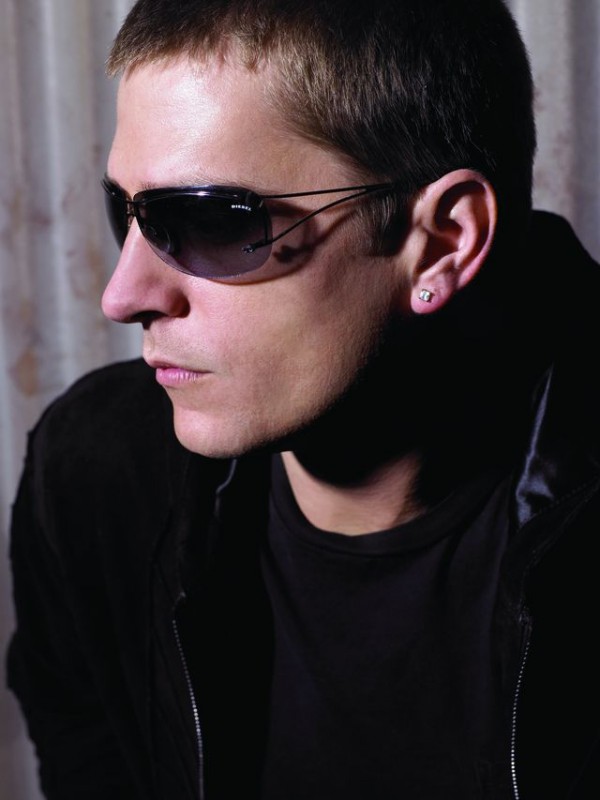
large.18i61i32187k
A Special, Intimate, Career-Spanning Performance

Rob Thomas

Durham Performing Arts Center
May 1, 2014

Multiple Grammy®-winning Emblem/Atlantic recording artist Rob Thomas has announced plans for a month-long North American special headline run, the rare and unique opportunity to catch the superstar performing in a more up close and personal setting featuring a career-spanning set. In his only east coast stop between Georgia and New Jersey, Rob Thomas brings this tour to DPAC, Durham Performing Arts Center, on May 1, 2014.

Tickets:

Online at DPACnc.com

DPAC Ticket Center: 919.680.2787, 123 Vivian Street, Durham, NC

Ticketmaster.com / Ticketmaster Charge by phone at 800.745.3000

Rob Thomas is one of the most distinctive vocalists and accomplished songwriters in contemporary music, garnering a string of accolades – both for his work as lead singer and primary composer with Matchbox Twenty as well as for his solo work and collaborations with other artists. In 2004, the Songwriters Hall of Fame presented Thomas with its first ever “Starlight Award” – created to recognize a songwriter in the early years of his or her career that has already made a lasting impact. He has won numerous BMI and ASCAP Awards, and has earned the Songwriter of the Year crown from both Billboard and BMI, two years in a row.

Thomas is best known for his chart-topping hits such as “Lonely No More” and “This is How a Heart Breaks” and Matchbox Twenty hits like “Push,” “3AM,” “If You’re Gone,” and “Bent.” Thomas also earned three Grammy Awards for “Smooth,” his smash collaboration with Santana. Thomas wrote and sang the song, which currently ranks first on Billboard’s “Top Hot 100 Rock Songs” chart and second on the magazine’s “Hot 100 All-Time Top Songs.” Thomas last solo album, Cradlesong, generated even more number one hits, including “Someday” and “Her Diamonds.” Overall, Thomas has contributed to sales of more than 80 million records.

Rob Thomas and his Matchbox Twenty band mates recently finished up their hugely successful sold-out world tour in support of their #1 selling album North. Fueled by critical acclaim – as well as the hit singles, “She’s So Mean,”  “Overjoyed” and “Our Song”– the album’s unprecedented success marked the band’s first-ever chart-topper and #1 debut. Rob is currently at work on his third solo album.

1212115930Feb2013

Duke Energy Center for the Performing Arts – Memorial Auditorium

Raleigh, NC

March 17, 2014

2120 South Michigan Avenue, home of Chicago’s Chess Records, may be the most important address in the bloodline of the blues and rock ‘n’ roll.

That address – immortalized in the Rolling Stones’ like-named instrumental, recorded at an epochal session at Chess in June 1964 and included on the band’s album 12 X 5 – serves as the title to George Thorogood’s electrifying Capitol/EMI salute to the Chess label and its immortal artists.

Thorogood has been essaying the Chess repertoire since his 1977 debut album, which included songs by Elmore James and Bo Diddley that originated on the label. He has cut 18 Chess covers over the years; three appeared on his last studio release, 2009’s The Dirty Dozen. On 2120 South Michigan Avenue, he offers a full-length homage to the label that bred his style with interpretations of 10 Chess classics.

The album also includes original tributes to the Windy City and Chess’ crucial songwriter-producer-bassist Willie Dixon, penned by Thorogood, producer Tom Hambridge, and Richard Fleming, plus a cranked-up version of the Stones’ titular instrumental.

Chess Records had been making musical history for a decade before it moved into its offices on Michigan Avenue, in the heart of the Windy City’s record business district, in 1957. Leonard and Phil Chess, sons of a Polish immigrant family and South Side nightclub operators, bought into a new independent label called Aristocrat Records in 1947. The brothers bought out their partners in 1950 and gave the label the family name; by that time, they had racked up blues hits by Muddy Waters, Sunnyland Slim, Robert Nighthawk, and St. Louis Jimmy.

Chess’ studio spawned timeless ‘50s and ‘60s recordings by Waters, Chuck Berry, Bo Diddley, and Howlin’ Wolf, which served as inspiration for the Stones and their blues-rocking brethren, and then lit a fire under their successors George Thorogood and the Destroyers.

Tickets: HERE

1360255766_92916_JA_Double_Denim

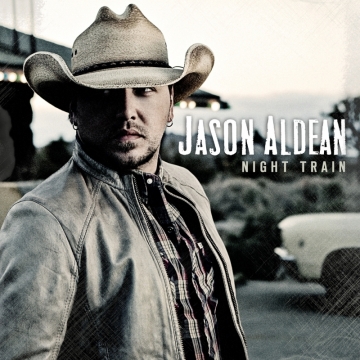
nighttrain-albumcover

Crown Center

Fayetteville, NC

January 23, 2014

2014 Night Train Tour
with Special Guests
Florida-Georgia-Line-CountryMusicIsLove
Florida Georgia Line
and
tyler-farr-bna-456
Tyler Farr

CMA Entertainer of the Year nominee Jason Aldean has become one of the biggest live touring acts in the nation, known for his high-intensity, unbridled performances, shows that sell out in just minutes and for smashing dozens of all-time venue attendance records.  The CMA and ACM Award winner’s Night Train Tour will stop in Fayetteville with special guests Florida Georgia Line and Tyler Farr opening the show.

The Macon, GA native has sold more than 8.5 million copies of his five studio albums, notched 12 No. one singles including “Amarillo Sky,” “Big Green Tractor,” “Dirt Road Anthem” and his most recent chart-topper, the title track off his current PLATINUM album NIGHT TRAIN.

For a full list of tour dates and ticket info as it becomes available, visit www.jasonaldean.com

Tickets: HERE

Crosby-Still-und-Nash-Tour-2013

Durham Performing Arts Center (DPAC)

Durham, NC

March 24, 2014

Legendary rock trio Crosby, Stills & Nash have announced a series of U.S. concerts for spring 2014 including a return to DPAC on March 24. The dates follow their critically acclaimed tour of the U.S., Europe and the U.K. throughout 2013. The group will perform songs from their extensive catalogue, as well as new material from each member. The last performance by Crosby, Stills & Nash at DPAC sold out in July of 2012, and fans have patiently awaited their return.

More than four decades since CSN first harmonized in Laurel Canyon, and played its first-ever concert as a trio at the legendary Woodstock festival, its members continue a creative partnership that is one of the most influential and enduring in music. David Crosby, Stephen Stills, and Graham Nash have each been inducted into the Rock and Roll Hall of Fame two times—with Crosby, Stills & Nash, and a second time with The Byrds, Buffalo Springfield, and The Hollies, respectively. They are also in the Songwriter’s Hall of Fame, honored both for CSN as a group, and as individual solo artists.

This March, CSN will be donating $1 per ticket sold to charity. And, excluding VIP and special benefit seat packages thru their official website, all spring tour tickets sold to the general public are priced under $100.

Tickets: HERE

discount-eagles-tickets

PNC Arena

Raleigh, NC

February 28, 2014

The EaglesGlenn Frey, Don Henley, Joe Walsh and Timothy B. Schmit – will perform classics spanning their career, including some that have never been performed live, as well as songs featured in “History of the Eagles,” the band’s acclaimed, top-selling documentary.

The Eagles have sold more than 120 million albums worldwide, earning five #1 U.S. singles and six GRAMMY® Awards. Their Greatest Hits 1971-1975 is the best-selling album of all time, exceeding sales of 29 million units. The band’s Hotel California and Their Greatest Hits Volume 2 have sold more than 16 and 11 million albums respectively. The Eagles were inducted into the Rock & Roll Hall of Fame in 1998.

Check EaglesBand.com for more information.

Tickets: HERE